
Il Viaggio del Matto Spiegato
L'arco narrativo nascosto dentro i 22 Arcani Maggiori
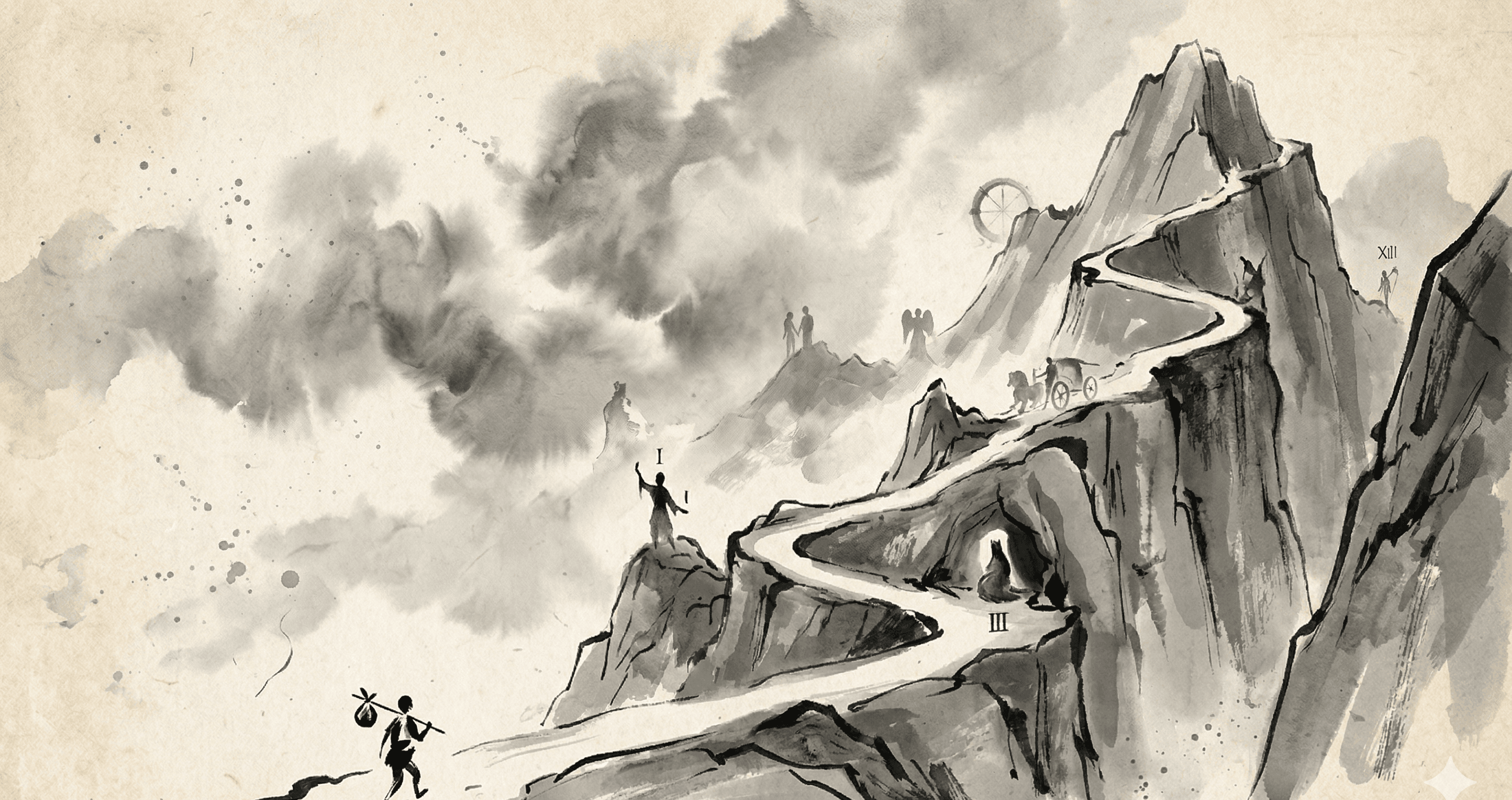
Una Storia in 22 Carte
Gli Arcani Maggiori non sono una raccolta casuale di simboli. Sono una storia — forse la più antica che esista. La storia di un'anima che attraversa la vita, incontrando ogni forza, ogni sfida, ogni rivelazione che definisce l'esperienza umana.
Il protagonista è Il Matto: la carta numero 0. Zero, perché Il Matto esiste prima che il viaggio abbia inizio. Prima dell'identità, prima della conoscenza, prima dell'esperienza. Il Matto è puro potenziale — quella parte di te che osa iniziare senza conoscere la fine.
Atto I: Il Mondo Materiale (0-VII)
Il Matto entra nel mondo e incontra immediatamente le sue forze. Il Bagatto mostra ciò che è possibile — gli strumenti, il talento, la potenza grezza della volontà. La Papessa rivela ciò che non si può vedere — l'intuizione, l'inconscio, la conoscenza che non viene dai libri.
L'Imperatrice e L'Imperatore sono i genitori cosmici: creazione e struttura, natura e civiltà, cuore e mente. Il Papa è il maestro che trasmette la saggezza della tradizione. E Gli Amanti presentano la prima grande prova: una scelta che definisce chi Il Matto diventerà.
Il Carro è il trionfo che segue la scelta — lo slancio in avanti, la determinazione, la sicurezza della giovinezza. Ma nota: questa è solo la carta VII su ventidue. Il Matto ha appena cominciato.
Atto II: Il Mondo Interiore (VIII-XIV)
Ora il viaggio si volge verso l'interno. La Forza insegna al Matto che il vero potere non è la forza bruta — è la pazienza, la gentilezza, il coraggio silenzioso di domare la propria natura. L'Eremita si ritira dal mondo per trovare la luce dentro di sé.
La Ruota della Fortuna gira: ciò che Il Matto ha costruito è ora soggetto a forze che vanno oltre il suo controllo. Le cose cambiano. La Giustizia arriva a pesare ciò che è stato fatto — causa ed effetto, spogliati di ogni sentimentalismo.
L'Appeso è il punto di crisi del viaggio. Tutto si ferma. Il Matto pende a testa in giù e vede il mondo da una prospettiva completamente nuova. Questa resa volontaria conduce alla carta più incompresa di tutte: La Morte.
La Morte non è una fine. È la grande trasformazione — il liberarsi di ciò che Il Matto non ha più bisogno. Il bruco non muore; diventa. E La Temperanza segue, mescolando il vecchio sé e il nuovo in qualcosa di intero.
Atto III: Il Mondo Spirituale (XV-XXI)
Il Diavolo incatena Il Matto agli attaccamenti materiali, alle dipendenze, alla paura. Ma le catene sono allentate — Il Matto può andarsene in qualsiasi momento. La prigione è scelta.
La Torre è la carta più drammatica del mazzo. Il fulmine colpisce. Le strutture costruite su fondamenta false crollano. Fa male. Deve fare male. La distruzione è il prerequisito per una ricostruzione autentica.
E poi, tra le macerie, appare La Stella. Speranza. Guarigione. La bellezza vulnerabile di ricominciare, questa volta con saggezza. La Luna trascina Il Matto attraverso un'ultima prova — il paesaggio delle paure, delle illusioni, della notte oscura dell'anima. Solo attraversando l'oscurità Il Matto può raggiungere Il Sole: gioia pura, chiarezza, il calore della verità.
Il Giudizio è la resa dei conti — non una punizione, ma il momento in cui Il Matto vede l'intero viaggio come un tutto. Ogni trionfo, ogni fallimento, ogni trasformazione era necessaria. Tutto ha portato qui.
E infine: Il Mondo. Carta XXI. Compimento. Integrazione. Il Matto è diventato intero — non perfetto, ma completo. E stando sul bordo del Mondo, Il Matto guarda avanti e vede... l'inizio. La carta 0. Il viaggio ricomincia. Ricomincia sempre.
Il Tuo Viaggio del Matto
Sei sempre da qualche parte nel Viaggio del Matto. Potresti essere all'inizio, entrando in qualcosa di sconosciuto. Potresti pendere a testa in giù, in attesa di una nuova prospettiva. Potresti stare tra le macerie della Torre, senza ancora vedere La Stella.
Quando peschi una carta in Sumi, non stai ricevendo un simbolo casuale. Stai trovando il tuo posto nella storia. E sapere dove ti trovi — questo è il primo passo per sapere dove stai andando.