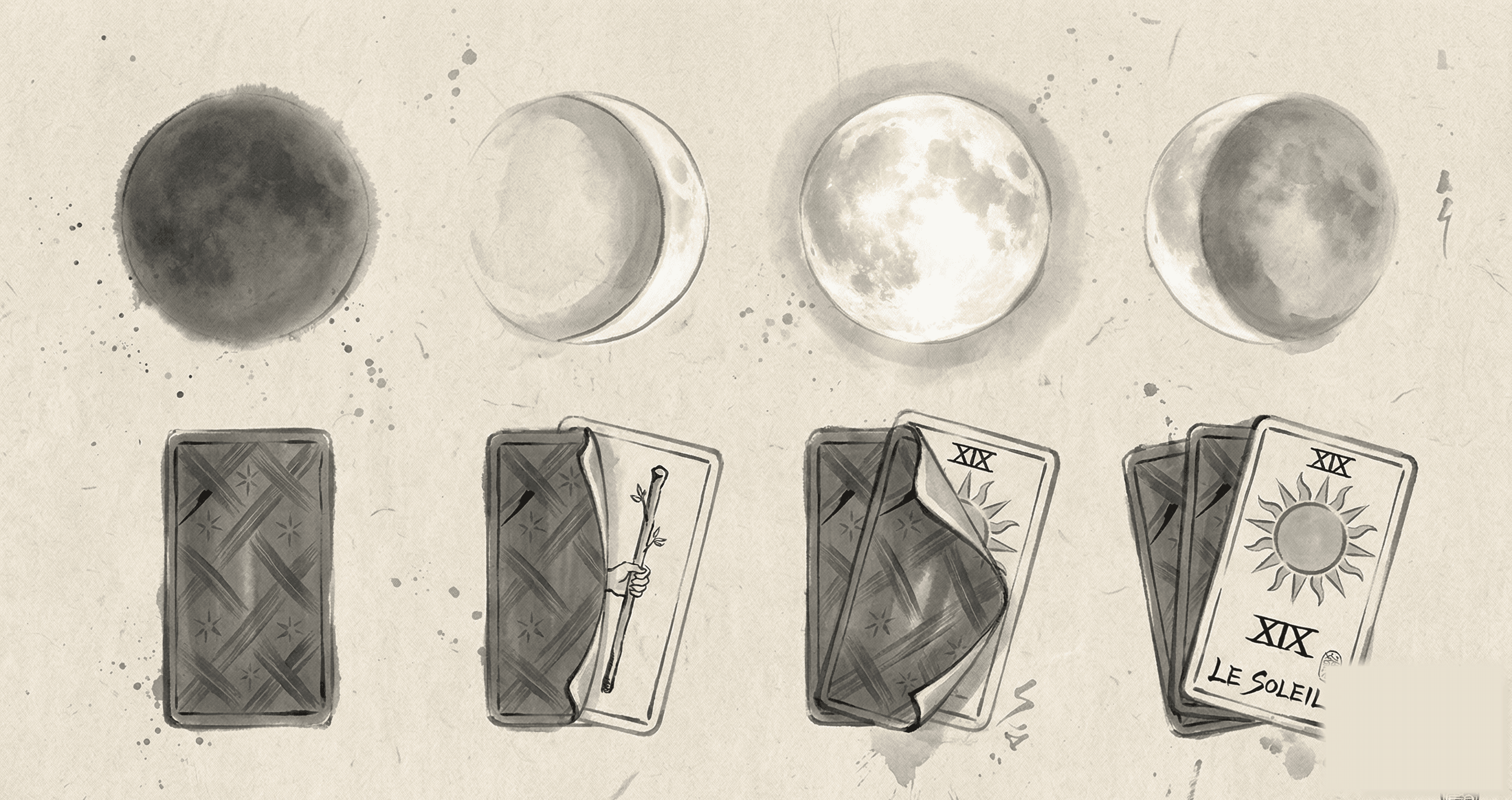
Why the Moon Matters
The connection between tarot and the moon isn't mystical — it's practical. The moon's cycle provides a natural rhythm for reflection. Four phases, roughly a week each, give you four built-in moments to check in with yourself.
You don't need to believe the moon "affects" your readings. You just need a calendar and the willingness to align your practice with a cycle larger than your own. There's something grounding about connecting your inner work to a celestial rhythm that has guided humans for millennia.
Did you know? Nearly every ancient civilization tracked the moon's cycle and wove it into their spiritual practices. The word "month" itself derives from "moon." Babylonian priests made offerings at each lunar phase. Roman calendars were originally lunar. The Jewish and Islamic calendars remain lunar to this day. By aligning your tarot practice with the moon, you are participating in one of humanity's oldest traditions — marking time by the light in the night sky.
New Moon: Setting Intentions
The new moon is darkness — the slate wiped clean. This is the time to pull a card for what you want to begin. What seed are you planting? What intention are you setting?
Best spread: A single card pull with the question: "What energy should I invite into this new cycle?"
Cards to welcome: The Fool (new beginnings), The Magician (manifestation), The Star (hope and vision). Cards to sit with: The Moon (confronting what you can't yet see), The Hermit (going inward before going outward).
The new moon is also an excellent time to review your tarot journal from the previous lunar cycle. Look at the cards you drew over the past four weeks. What themes emerged? What questions kept returning? Use those patterns to inform your new moon intention. For example, if you drew several cards related to patience and surrender (The Hanged Man, Temperance, The Hermit), the new cycle might call for setting an intention around trust — trusting the timing of your life rather than forcing outcomes.
Waxing Moon: Building Momentum
As the moon grows, energy builds. This is the time for action, effort, and growth. Pull a card to understand what's supporting your intention — or what's resisting it.
Best spread: Past · Present · Future, focused on your new moon intention. How is it evolving?
This phase corresponds to the cards of action and will: The Chariot, Strength, The Emperor. If you draw challenge cards during this phase, pay attention — they're showing you where your intention meets friction.
The waxing moon phase typically lasts about two weeks — from the thin crescent to the full disc. During this time, many practitioners do a weekly card pull focused specifically on progress. The question shifts from the new moon's "What am I beginning?" to "What is helping me grow?" or "What obstacle needs my attention?" This regular check-in keeps your intention alive and responsive rather than static.
Full Moon: Illumination
The full moon reveals. What was hidden becomes visible. This is the most powerful time for readings — your intuition is at its peak, and the cards tend to cut straight to the truth.
Best spread: A single card with the question: "What do I need to see right now?" Or the Yes/No spread for decisions you've been postponing.
The full moon energy is intense. Don't be surprised if you pull heavy cards — The Tower, Death, Judgement. They're not punishments. They're the moonlight showing you what's already there.
Some readers treat the full moon as a time for gratitude as well as revelation. Before pulling your card, take a moment to acknowledge what has grown since the new moon. What intentions have taken root? What progress, however small, has been made? Gratitude creates a container of safety that allows you to receive even challenging full moon messages with equanimity rather than fear. The full moon illuminates — and what it illuminates is easier to face when you are grounded in what is already good.
Waning Moon: Release
As the moon shrinks, so should what no longer serves you. This is the time for letting go — habits, relationships, beliefs, fears. Pull a card to understand what you're ready to release.
Best question: "What am I holding onto that I need to let go?"
This phase resonates with The Hanged Man (surrender), Death (transformation through ending), and The World (completion). If you draw The Devil, ask yourself: what chains am I ready to break?
The waning moon is also a powerful time for forgiveness — of others and of yourself. If a card surfaces a painful memory or a relationship wound during this phase, consider it an invitation to release not just the situation but the emotional weight you have been carrying. Forgiveness in this context is not about condoning what happened. It is about setting down a burden you no longer need to carry. The waning moon supports this lightening. As the sky darkens toward the next new moon, you create space for whatever comes next.
Creating Your Lunar Tarot Calendar
To build a moon-aligned practice, start by marking the four lunar phases on your calendar or using a moon phase app. At minimum, do a reading at the new moon and the full moon — these are the two most significant points in the cycle.
As your practice deepens, add the waxing and waning readings. Over time, you will develop a four-part monthly rhythm: intention, action, revelation, release. This cycle mirrors the natural rhythms of growth found everywhere in nature — the inhale and exhale, the planting and harvesting, the waking and sleeping.
After three full lunar cycles (roughly three months), review your journal. You may notice that certain cards tend to appear during specific moon phases. Perhaps The Hermit always shows up at the new moon, or The Tower tends to arrive at the full moon. These personal moon-card associations become a powerful addition to your interpretive vocabulary.
Continue reading
The Fool's Journey Explained→